
Clogged Gutters Are a Roof Problem: What to Fix Before the Leaves Drop
Most Roof Leaks We Fix Start at the Edge
When a homeowner calls us about a stain on a bedroom ceiling, the damage is rarely in the middle of the roof. It is almost always at the edge — where water that should have run into a gutter went somewhere else instead. By the time it shows up inside, the fascia board behind the gutter has usually been wet for a couple of seasons.
New Jersey gives you a narrow window to get ahead of this. Late September through October brings the leaf drop, and right behind it comes the freeze-thaw cycle that turns a slow drip into a split seam. Everything in this article is meant to be handled before the first hard rain of October, and most of it you can check yourself from the ground.
Get a Free Estimate!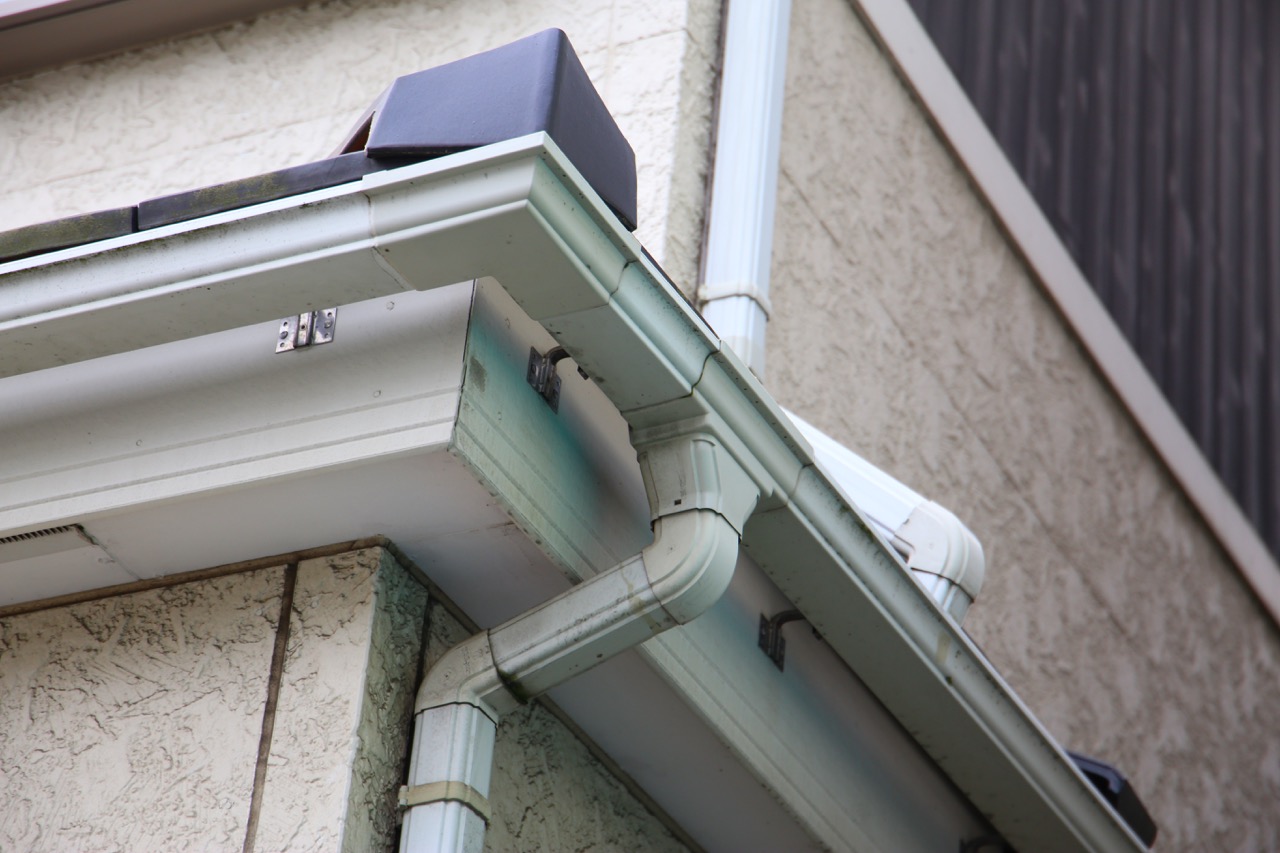
Five Things Worth Knowing Before You Climb a Ladder
This is the same walkthrough we give homeowners standing in their driveway. Jump to whichever part applies to your house — or read it start to finish if you have not looked at your gutters in a few years.
Your Gutters Are Part of Your Roof
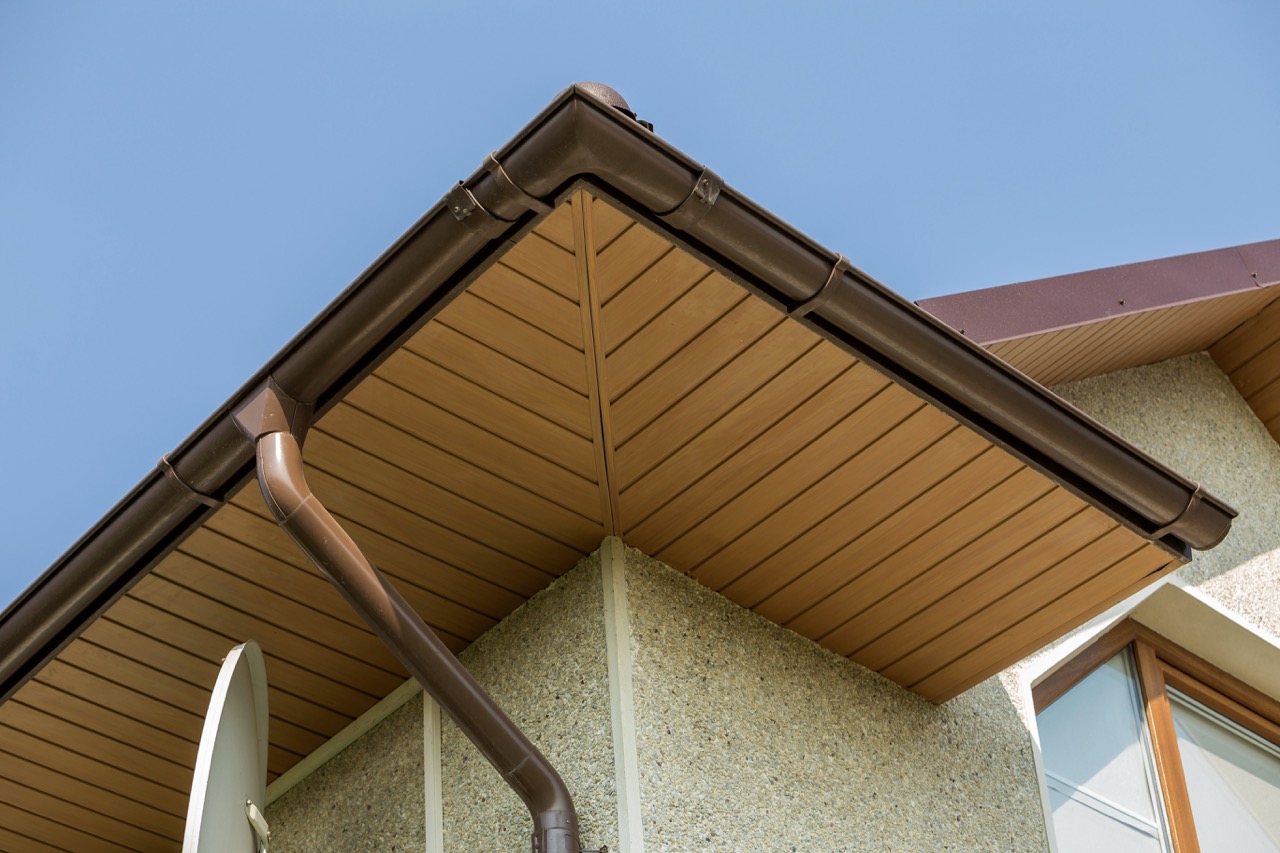
Homeowners tend to file gutters under landscaping — something in the same mental category as trimming hedges. They are not. A gutter is the last six inches of your roof system, and when it fails, the failure moves upward into the roof rather than down into the yard. Water backs up over the gutter lip, runs behind the trough, and soaks the fascia board the gutter is screwed into. From there it reaches the roof sheathing and the ends of the rafters.
That is the chain we see over and over: a clogged trough in October, soft fascia by spring, a stained ceiling the following winter. The repair also grows at every step. Cleaning a gutter is nothing. Replacing fascia and re-decking the first two feet of roof edge is a real job. If yours is already at the soft-wood stage, that falls under soffit and fascia repair rather than a simple gutter cleaning.

Six Things You Can Spot From the Ground
You do not need to get on a ladder to find most gutter problems, and we would honestly rather you didn't. Wait for a decent rainstorm, stand back from the house with an umbrella, and watch what the water actually does. Look for water sheeting over the front lip of the gutter instead of running to a downspout — that means the trough is either full or pitched wrong. Look for a downspout that stays dry while the gutter above it overflows, which points to a blockage at the outlet.
Then look at the house itself on a dry day. Vertical dirt streaks down the siding under a gutter joint mean water has been escaping there for a while. Peeling paint or dark staining on the fascia board is the next stage. Gutters that sag between hangers, or that have pulled away from the fascia enough to show daylight behind them, are past due. And if you have a trench or splash-back stain in the mulch bed directly below the eave, water has been landing there instead of in the gutter for at least a season.
Any one of these is worth a look. Two or more in the same run usually means the fascia behind it is already wet, and a roof inspection is the cheaper move before it turns into a roof leak repair.
What Properly Hung Gutters Look Like
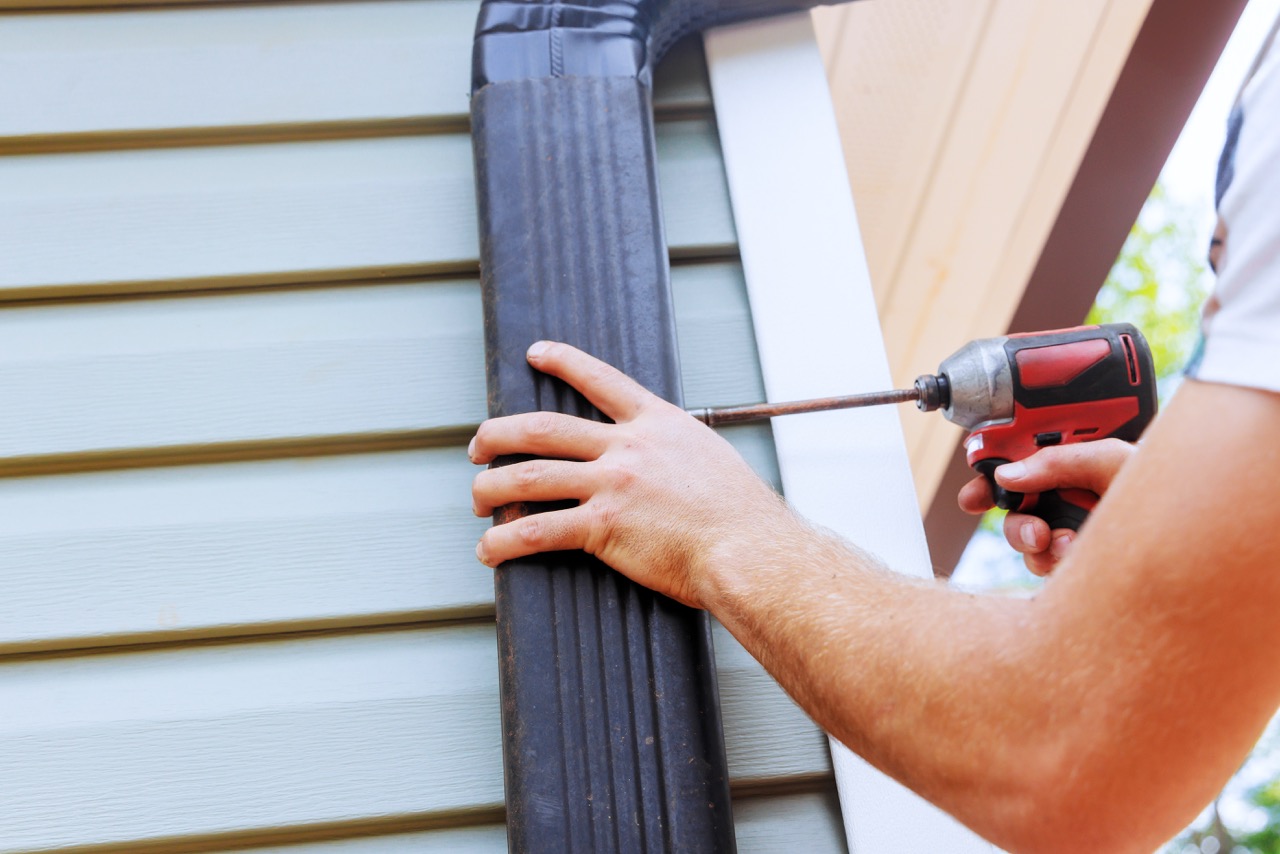
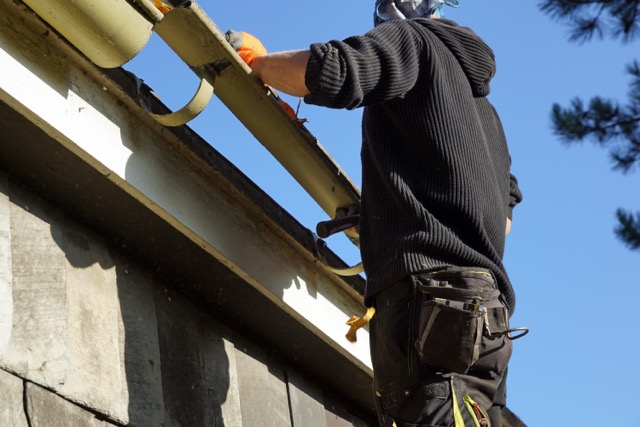
A good gutter job is mostly invisible, which is exactly why bad ones get sold so easily. The things that matter are pitch, hanger spacing, and the fascia underneath. The trough should fall roughly a quarter inch for every ten feet toward the outlet, hangers should sit about every two feet — closer in the parts of New Jersey that hold snow — and the fascia board has to be sound before anything gets screwed into it. Hanging a new gutter on rotted wood is the most common shortcut we get called out to undo.
Downspouts matter as much as the trough. One outlet per thirty to forty feet of run, discharging well clear of the foundation, not into a splash block that dumps water back against the wall. Click any photo to see the detail up close.


Where Gutters Actually Leak
Sectional gutters — the ten-foot lengths sold at the home center — join together with sealed connectors every ten feet. Those joints are the single most common leak point on any gutter system. Sealant is flexible when it goes on and brittle after a few New Jersey winters, and once a joint opens, water runs straight down the back of the gutter into the fascia. That is the failure you cannot see from the ground until the wood goes soft.
Seamless gutters are rolled on site from a continuous coil, so a forty-foot run has zero joints in the middle of it — only at the corners and outlets, where the geometry requires them. That is the entire argument for them, and it is a good one on a house with long straight runs. On a cut-up roofline with lots of short sections, the advantage shrinks and honest sectional work can be fine. We will tell you which one your roofline actually calls for when we look at it, whether that ends up being seamless gutters or a straightforward gutter installation.

Do Gutter Guards Actually Work?
Mostly yes, with a caveat nobody selling them likes to say out loud: guards reduce cleaning, they do not eliminate it. A good micro-mesh or reverse-curve guard will keep out the maple and oak leaves that cause the real blockages, which on a wooded New Jersey lot is the difference between cleaning twice a year and checking once every couple of years. What guards do not stop is the fine shingle grit, pine needles, and seed pods that settle into a paste at the bottom of the trough. That still needs to come out eventually.
The cheap snap-in plastic screens are a different story. They flex under snow load, pop out of the shingle course they were tucked under, and often make the problem worse by trapping debris on top where you cannot reach it. If you already have those, pulling them is usually the right call. Quality gutter guards are worth it on a tree-heavy property; on an open lot with a simple roofline, a twice-yearly clean and the occasional gutter repair is honestly the better value.
One more thing worth checking while you are up there in spirit: your soffit vents. Blocked soffit ventilation and overflowing gutters together are the recipe for the ice dams that show up on North Jersey roofs every January. Getting roof ventilation right in the fall is far easier than dealing with ice dam removal in the middle of a cold snap.
What Happens After You Call Us
No pressure, no all-day sales presentation. Here is the actual sequence, start to finish.
You Call or Message
Tell us what you are seeing and roughly when it started. We will let you know on the phone if it sounds urgent or if it can wait a week.
We Look at the Whole Edge
Gutters, fascia, soffit, shingle edge and downspout discharge — all of it, not just the section you called about.
Written Estimate
Itemized and split into what needs doing now versus what can wait. No verbal ballparks that change later.
Material & Color
Profile, gauge and color picked to match your trim. We show you the options rather than defaulting to whatever is on the truck.
Install Day
Most residential gutter runs are a one-day job. Any rotted fascia gets replaced before the new trough goes up, not after.
Cleanup & Warranty
We magnet-sweep the property before we leave and hand you the warranty paperwork the same day.
The Five Parts of Your Roof Edge
The Trough Is the Easy Part
Five-inch K-style handles most New Jersey homes fine. Six-inch is worth the upgrade on steep roofs, large roof areas draining to a single run, or houses that already overflow during heavy summer downpours. Aluminum in .032 gauge holds its shape under snow load far better than the thinner .027 that gets used to hit a low bid.
The trough itself rarely fails on its own. When we replace one, it is almost always because something behind it failed first.
Where the Water Actually Goes
An undersized or badly placed downspout will overflow a perfectly good gutter. The rule of thumb is one outlet per thirty to forty feet of run, and more on a roof with a large drainage area feeding one side.
Just as important is where it lets out. A downspout that dumps at the foundation is trading a roof problem for a basement problem. Extensions or a tie-in to underground drainage solve it cheaply.
The Board Everything Hangs From
Fascia is the flat board running along the roof edge, and it is what your gutter hangers screw into. Once it goes soft, nothing you attach to it will hold — new gutters on rotten fascia will sag again within a season or two.
Press a screwdriver into it. If it sinks, the board needs replacing. This is standard soffit and fascia repair work and is far less disruptive than homeowners expect.
The Part Nobody Looks At
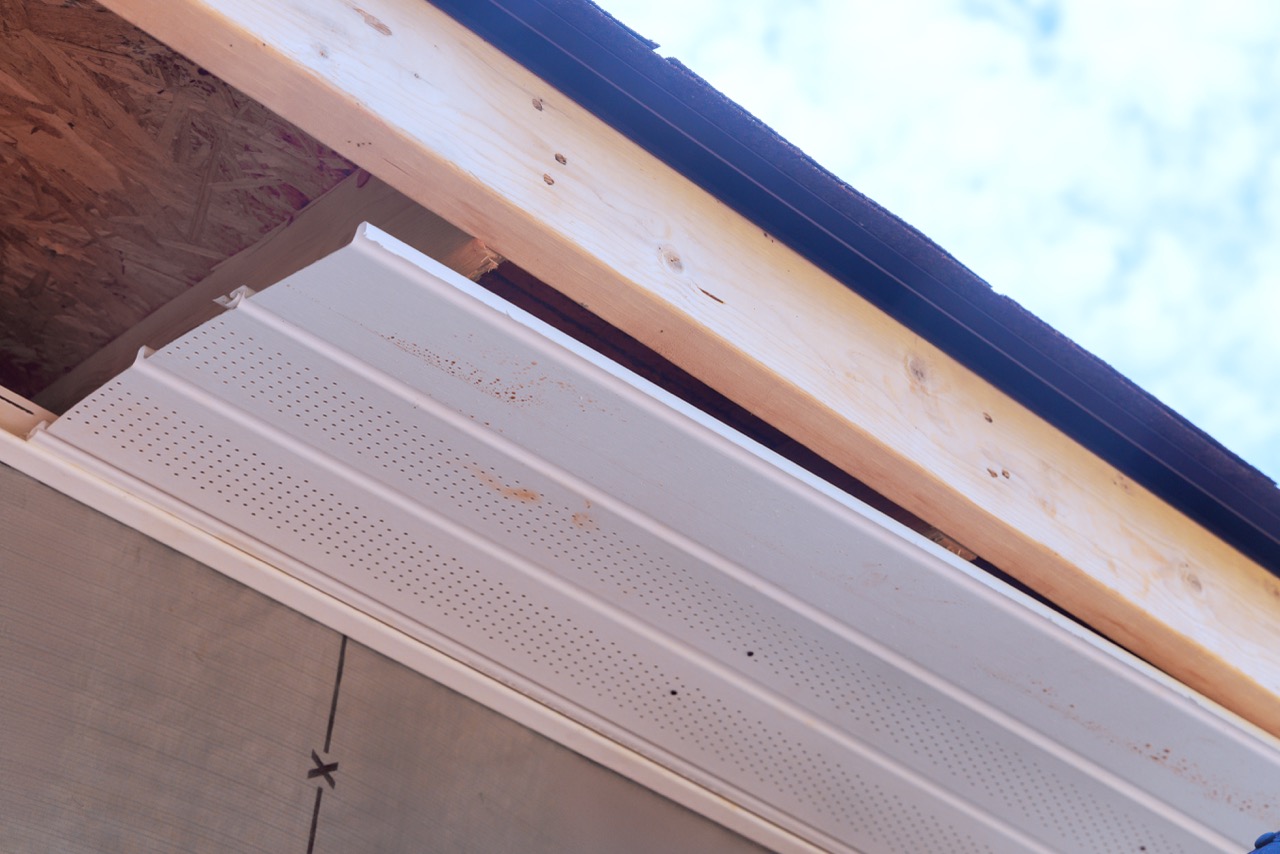
Soffit is the underside of the eave, and on most homes it carries the intake vents that let air into the attic. Blocked or painted-over soffit vents mean the attic cannot breathe, which drives up summer cooling costs and creates the warm-roof conditions that cause ice dams.
If your soffit panels are stained, sagging or crumbling, water has been getting in from above — usually from the gutter directly overhead.
Where Roof Meets Gutter
The first course of shingles and the drip edge flashing beneath it are what direct water into the gutter rather than behind it. Missing or improperly lapped drip edge is a common find on older New Jersey homes and on jobs where a previous crew cut corners.
If shingles at the edge are curling, cracked or lifting, water is getting underneath regardless of how clean your gutters are. That is a roofing fix, not a gutter fix.
What Homeowners Ask Us Most
Twice a year on a typical lot — once in late spring after the seed pods drop, once in late fall after the leaves finish. If you have mature oaks or maples close to the house, three times is more realistic, with the last one in early December once the stragglers come down.
Often, yes. If the rest of the system is sound and the damage is isolated to one corner or a single length, a partial repair makes sense and we will quote it that way. Where it stops making sense is when you are patching the third section in two years — at that point you are spending replacement money in installments.
Not always, but it is usually the smart time to do it. The gutters have to come off or be worked around during a tear-off anyway, and doing both at once means the drip edge, fascia and gutter all get set correctly as one system. If your gutters are more than fifteen years old, doing them alongside a roof replacement costs less than doing them separately later.
It depends on the cause. Sudden damage from a storm, a fallen limb or hail is often covered; gradual deterioration and clog-related overflow generally are not, because carriers treat those as maintenance. If a nor'easter took your gutters down, document it with photos before anything is touched and let us walk you through the insurance claim side. Your policy and adjuster make the final call, not us.
Most single-family homes are a one-day job, start to finish. Add half a day if fascia needs replacing or if the roofline is complex with a lot of corners and elevation changes. We will tell you the realistic timeline in the estimate rather than promising a half day and running into the evening.
Every repair we do carries a minimum one-year warranty on our workmanship. Complete roof replacements come with a 50-year manufacturer warranty through our Timberline and Owens Corning certifications. You get the paperwork in hand on the day we finish, not mailed weeks later.
Related Services
Seamless Gutters
Rolled on site to the exact length of your roofline, so there are no mid-run joints to open up and leak.
Learn MoreSoffit & Fascia Repair
Replacing the wood behind and beneath your gutters so new hangers have something solid to hold onto.
Learn MoreRoof Inspection
A full look at the roof and its edge before winter, with photos and a written summary of what we found.
Learn MoreWhat Craftsman Roofing Stands Behind
BBB A+ Rated
An A+ rating with the Better Business Bureau, earned the slow way — one job at a time.
Google Guaranteed
Screened, background-checked and backed by Google's guarantee on work booked through their platform.
Timberline & Owens Corning
Certified with both manufacturers, which is what allows us to register the long-form warranties.
50-Year Roof Warranty
Complete roof replacements carry a 50-year manufacturer warranty. Every repair carries a minimum of one year.
Family Owned in Fairview
Based in Fairview and working across Central and Northern New Jersey. You are dealing with the owners, not a call center.
Clean Jobsites, Honest Pricing
The property gets swept before we leave, and the number on the estimate is the number on the invoice.
Areas We Serve
Get It Looked At Before October
An estimate costs you nothing and takes about twenty minutes. If your gutters are fine for another season, we will say so and you can stop thinking about it until spring.
Reach Out
Call or send the form with a rough description of what you are seeing.
We Take a Look
A full check of the roof edge — gutters, fascia, soffit and shingle line.
You Decide
A written, itemized estimate. No pressure and no expiring discounts.