
Roof ventilation in NJ. Balanced intake and exhaust — the system that keeps your shingles cool, your attic dry, and ice dams off the eaves.
A roof is not a sealed box. It's an airflow system: cold air enters at the soffit, warm air exits at the ridge, and a properly designed path between the two keeps the deck close to outdoor temperature year-round. Most attics in NJ get this wrong — soffit vents are blocked by insulation, ridge vents are added without intake to feed them, or three different exhaust types are mixed on the same roof and short-circuit each other. Craftsman diagnoses the full intake-and-exhaust path, fixes what's actually broken, and writes a workmanship warranty on the work. Family-owned, NJ-licensed, based in Fairview.
Fairview, NJ
A roof works the same way a chimney does. Cold air in low, warm air out high, no detours.
Every asphalt shingle manufacturer ties their warranty to attic ventilation. Read the GAF Golden Pledge, read the Owens Corning Platinum — both will void coverage if the attic isn't ventilated to the building code minimum (1 square foot of net free area per 150 square feet of attic floor, or 1:300 with a vapor retarder). The reason isn't paperwork. It's that a poorly ventilated attic cooks shingles from underneath in summer and traps moisture against the deck in winter, and both will halve a roof's lifespan no matter what brand of shingle you put on top.
The fix is a balanced system: continuous soffit intake at the eaves, continuous ridge or gable exhaust at the peak, and a clear path through the attic between the two. When that path is open, the underside of your roof deck stays within a few degrees of the outdoor temperature — which means snow on top doesn't melt unevenly in February, shingles don't bake from below in August, and the moisture your house generates (showers, cooking, breathing) finds its way out instead of condensing on the underside of the deck. Done right, ventilation is also the single most effective fix for recurring ice dams.
Call 201-218-2740
Four things to know before someone tells you a ridge vent will fix everything.
Why roofs need to breathe in the first place. The intake-and-exhaust system explained. The mistakes we find on 90% of NJ attics. And what our written warranty actually covers.
A baked attic in August will age your shingles faster than the sun on top of them does.
An unventilated attic in NJ summer can hit 150°F at the ridge. Asphalt shingles are designed to handle radiant heat from above — that's what they're for — but they're not designed to be cooked from underneath at the same time. When the attic stays in the 130–150°F range for weeks at a time, the asphalt binder in the shingle softens, granules loosen, and the membrane curls and cups. A properly ventilated attic in the same NJ summer holds 95–110°F because outdoor air is constantly flowing through. Same shingles, same sun, half the thermal load — and 10–15 years more lifespan.
Winter is the moisture problem. A family of four generates 2–4 gallons of water vapor per day — showers, cooking, breathing, dishwasher steam, laundry venting. When that vapor migrates up into the attic and the deck is colder than the dew point of the attic air, the moisture condenses on the underside of the sheathing as frost. Each freeze-thaw cycle delaminates the deck and rusts the nails. We see attics in March where the rafters look like they've been sprayed with a hose — that's six months of trapped moisture, not a roof leak. Proper ventilation moves that moisture out before it condenses. If the deck is already showing rot, an upcoming roof replacement is the cleanest time to correct ventilation alongside.
Ridge vents pull air. They can only pull what the soffits let in. No intake, no airflow, full stop.
Ventilation is a balanced system: net free intake area at the soffits should approximately equal net free exhaust area at the ridge. When that balance is off, two bad things happen. If exhaust outpaces intake — say someone added a long ridge vent without opening up the soffit baffles — the ridge vent starts pulling conditioned air up out of the living space through whatever attic-floor leaks exist (recessed lights, plumbing penetrations, attic hatches). That's expensive in winter and worse for the moisture problem because it pulls humidified house air directly into the cold attic. If intake outpaces exhaust, the system stalls and the attic just sits there at outdoor temperature plus solar gain.
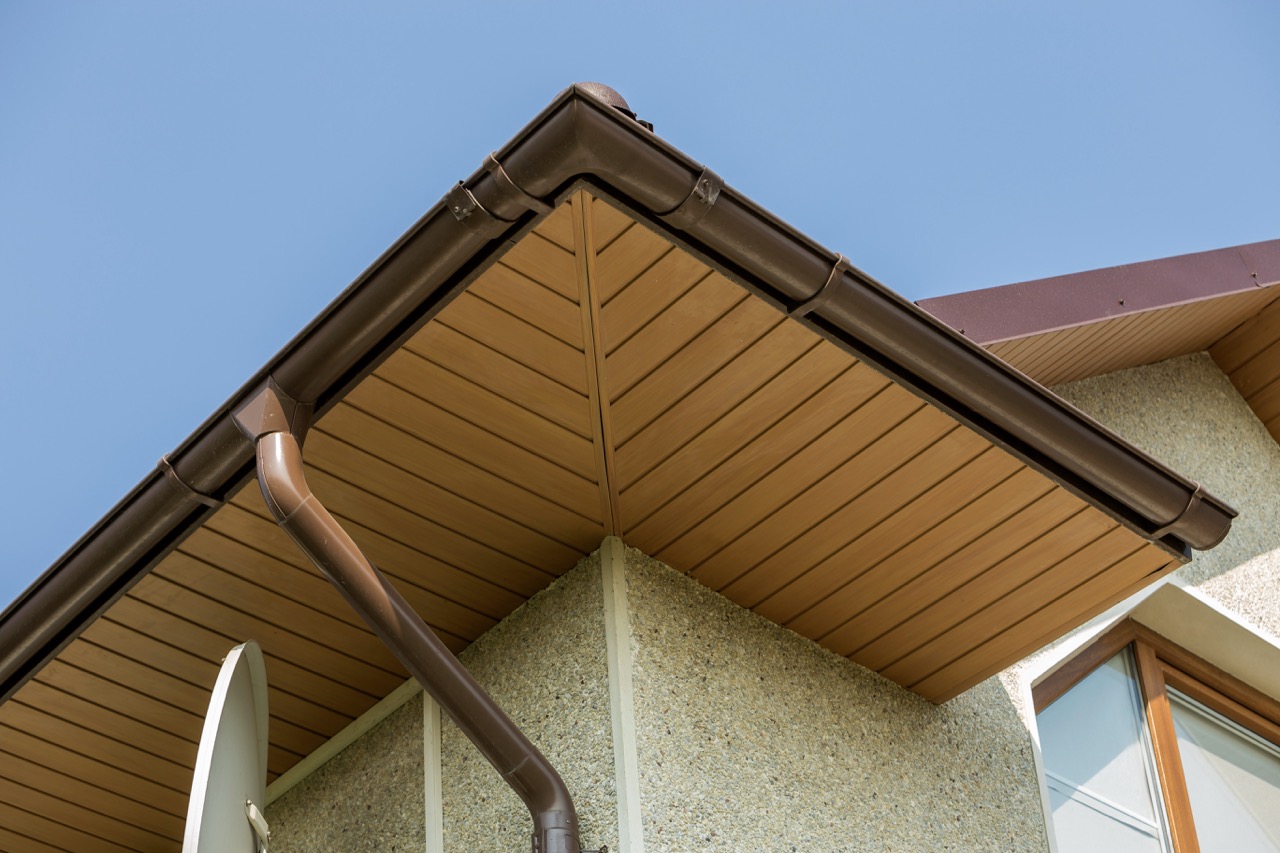
Intake lives at the soffit — the underside of the roof overhang. The two common types are continuous strip soffit (a slotted aluminum or vinyl panel running the full length of the eave) and individual round vents at intervals. Either works if the net free area is right and the path into the attic isn't blocked by insulation. The fix for blocked intake is rigid foam baffles between every rafter bay, holding the insulation back so air can flow up under the deck. Exhaust lives at the high point — ridge vent (the gold standard for cathedral-style roofs and modern construction), gable louvers (older NJ housing stock), or static box vents (cheap, common, less effective). The soffit and fascia line is where intake either succeeds or quietly fails — if those wood components are rotten or the panels are clogged with paint, the whole system locks up. Our soffit and fascia repair page covers when the intake side itself needs structural work.
Mixed exhaust types, blocked baffles, undersized intake, oversized turbines, sealed gable ends after a ridge vent install.
Mixing exhaust types is the most common one. A roof with a ridge vent AND active gable louvers will short-circuit: the ridge vent pulls air from the gable end (which is two feet away with no resistance) instead of from the soffits (which are 20 feet away through the attic with insulation in the path). The fix is to seal the gable louvers when a ridge vent goes on. Adding a powered turbine on top of an existing ridge vent does the same thing — turbine wins, ridge vent becomes an inlet, the ridge cap leaks in storms because air is now coming IN through it. We pick one exhaust type per roof plane and commit to it.
Undersized intake is mistake number two. Code is 1:150 NFA without a vapor retarder, 1:300 with one — and the intake half should be at least equal to the exhaust half. We measure the actual continuous-strip soffit length, calculate net free area from the manufacturer spec, and if it's short, we add additional intake (extra strip soffit, edge-of-deck intake vents, or smart vent at the eave). Mistake three: paint clogging the soffit perforations on older homes — looks fine from the ground, blocks 80% of airflow. Mistake four: bath fans venting into the attic instead of through the roof. Mistake five: skipping ventilation entirely on a cathedral ceiling because the contractor "couldn't figure out a path." A baseline roof inspection with attic walk catches all five before they become a leak.
Workmanship warranty on the install. If a ridge vent leaks or a baffle pops out, we come back. No charge.
Standalone ventilation work — adding a ridge vent, installing baffles, sealing a sidewall gable, adding an edge-of-deck intake — carries a written one-year minimum workmanship warranty. If something we installed fails to perform — ridge vent leaks during a wind-driven rain, baffle dislodged inside the attic, edge intake separating from the deck — we come back, we fix it, no questions. Most workmanship issues in ventilation work show up in the first storm season after install, which is why we ask homeowners to check the attic after the first hard winter rain and call us if anything looks off.
If the ventilation work is done as part of a full roof replacement, the entire assembly — deck, underlayment, intake, exhaust, ridge cap, shingles — is covered under the manufacturer's full system warranty (50-year on GAF Timberline HDZ with Golden Pledge, similar on Owens Corning Platinum) plus our workmanship warranty on top. The system warranty is the one that matters long-term, because it covers shingle defects that show up at year 18 — but it's also the one that the manufacturer voids if the attic isn't ventilated to spec, which is the whole reason we do the math up front. If you've got an existing roof with no obvious problems and just want a baseline reading on the attic, an annual roof maintenance visit includes a full ventilation check.
The crew that runs the math, opens the soffit, and balances the system — not just the one that nails on a ridge vent and leaves.
Most ventilation jobs in NJ are sold as a single product — "we'll add a ridge vent" — when what the attic actually needs is a system review. We do the system review first. The fix that comes out of it might be smaller than what you expected, or it might be larger. Either way, you'll know what's actually wrong and why.
- NJ-licensed, NJ-insured, family-owned, permanent Fairview address
- BBB A+ Accredited, GAF and Owens Corning manufacturer-certified
- Net free area calculation done before any product gets specified
- Soffit baffle installation, gable sealing, ridge vent retrofit, edge intake
- One exhaust type per roof plane — no mixed systems that fight each other
- One-year minimum written workmanship warranty on every install
Six steps from first attic walk to balanced system in your file.
No product gets specified until the math is done. No work starts until the path is clear in writing.
Call & Schedule
Call or use the form. We schedule an attic walk in a one-hour window that works around your day, not ours.
Attic Inspection
Walk the attic with a flashlight and a moisture meter. Check baffle status, exhaust inventory, deck condition, insulation depth.
Net Free Area Math
Measure attic floor square footage, calculate required intake and exhaust at 1:150 or 1:300, compare to what's actually installed.
Itemized Quote
Written quote naming each line item — baffles, ridge vent linear feet, gable seal, edge intake — with parts, labor, warranty terms.
Install Day
Same crew on every job. Tarp setup, work zone, full debris cleanup. Most ventilation retrofits run a single day on residential.
Walkthrough & Warranty
Final walkthrough, before-and-after photos in your file, manufacturer paperwork where applicable, written workmanship warranty.
The credentials behind every soffit baffle and every ridge cap.
NJ-Licensed, NJ-Insured, Fairview-Based
Family-owned with a permanent NJ address. The crew that installs the system is the crew you can call back if something looks off.
BBB A+, GAF & Owens Corning Certified
Both major shingle systems certify our installs — including the ventilation requirements baked into their warranty terms.
Net Free Area Math, Not Eyeball Estimates
We calculate required intake and exhaust against attic floor area before specifying any product. If the math doesn't add up, we say so.
One Exhaust Type Per Roof Plane
No ridge vents fighting gable louvers. No turbines on top of ridge vents. Mixed systems short-circuit — we pick one and commit.
Baffles Installed In Every Rafter Bay
Standard on every retrofit. Rigid foam baffles hold insulation back from the deck and keep the soffit-to-ridge airflow path open.
Written Workmanship Warranty
One-year minimum on every standalone ventilation install. Full system warranty when ventilation is done as part of a reroof.
Services often booked alongside ventilation work.
Ice Dam Removal
Ventilation is the long-term fix for recurring ice dams. We steam off the active dam and then balance the attic so February doesn't repeat.
Learn MoreRoof Inspection
The cheapest first step before any ventilation work. Full attic walk, moisture check, baffle status — written up plain.
Learn MoreSoffit & Fascia Repair
The intake side of the ventilation system lives at the soffit. If the soffit is rotten, painted shut, or damaged, the whole system locks up.
Learn MoreAcross Bergen, Morris, Somerset, Middlesex, and the surrounding NJ residential belt.
Three steps from first call to balanced system in your file.
Call now to schedule an attic walk. We diagnose, we run the math, and we write up the actual fix — not the upsell.
Attic Walk & Diagnosis
One-hour appointment window. Full attic walk, baffle and exhaust inventory, moisture check, deck condition.
Written Quote
Net free area math, line-item parts and labor, exhaust type chosen, warranty terms — handed to you in writing before anything starts.
Install & Warranty
Same crew on install day. Full cleanup, before-and-after photos, written one-year minimum workmanship warranty.